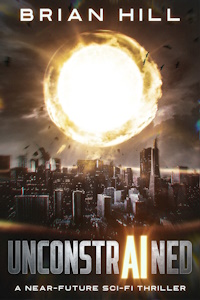
Unconstrained Cover Reveal
Posted by llt in Uncategorized on February 28, 2024
Hey everyone. I’ve been quietly plugging away at the new book, which is why you haven’t heard from me in a while. Writing is going well, and I hope to have the new book out to beta readers by the end of March. That said, I DID just get the cover back, and I think […]
The plan for 2024
Posted by llt in Uncategorized on January 22, 2024
Happy New Year, everyone! Hope the end to the holiday season was just as fun as the beginning. Like most of you, I’m getting back into my routine, and I wanted to give you guys an idea of what to expect. First, I’d like to announce that I’m around 50% of the way through writing the […]
Meet Skeeter
Another new character, perhaps my favorite in The Commune, is Skeeter, a down-on-his-luck airboat pilot and owner of Skeeter’s Airboat Charters, an organization that figures heavily in the new story. Gibson, Louisiana: 3:35 PM, Tuesday, December 11th, 1984 Skeeter’s Airboat Charters was little more than a mouldering shack on the outskirts of Gibson. There was a single air […]
Meet Miss Thelma
I’ve been chomping at the bit to share some snippets of the new characters in The Commune, the next book in the Parata series, and I want to begin with a little old lady. Meet Miss Thelma: Baton Rouge, Louisiana: 9:37 AM, Tuesday, December 11th, 1984 We left for the two-hour drive to Baton Rouge first […]
Symbols
If you’ve read any of the Parata books, you’ve probably noticed that I’ve included some ‘props’ in the form of images in both books. I enjoy doing this because I feel it’s more impactful than just describing these images. For example, the symbol in The Betrayed feels sinister and mysterious to me, but if I had just described […]
Burke’s Residence
I thought I’d give you guys a closer look at another location from The Betrayed, the historic home Sarah Burke lives in. I chose the Beauregard-Keyes House partially because I’ve always thought it was beautiful, and partially because the layout, the unusual semi-basement ground floor and elevated first floor, fit the narrative. It also has a wealth of history, […]
Meet Bernie
To honor the release of the second Parata Occult Mystery book, The Betrayed, I’ve decided to give you guys a preview of one of my favorite new characters, Bernard Latour: New Orleans, Louisiana: 4:09 PM, Tuesday, October 16th, 1984 After spending a fruitless morning interviewing Burke Foundation volunteers, Rae and I visited a sandwich shop for a […]
Saint Christina’s Church
In The Betrayed, most of the book is set in Nola proper, and one of the reasons I did that is that I wanted to include some iconic locations in the book. The first of those, introduced in the very first chapter, is a place I named Saint Christina’s Catholic Church in the book, but […]
Experiments in AI Art
Love it or hate it, AI art seems to be here to stay. This is a fairly touchy subject amongst artists and authors, some of whom are (justifiably, I believe) concerned about their livelihoods. Also, the legality and copyright issues around AI art are up in the air at the moment due to the way […]
Lafon Boy’s Home
I’ve already covered most of the locations used in The Artifact (you can read about them here and here if you missed the newsletters), but there’s another location that was so creepy, I had to add it to the book, even though I didn’t really need another location. The place is named the Lafon Boy’s […]
Parata Occult Mysteries, #3

Near-future sci-fi thriller
Parata Occult Mysteries, #4
Recent Comments